Rocket Lab is an American aerospace manufacturer with a wholly owned New Zealand subsidiary. The company develops lightweight, cost-effective commercial rocket launch services. The Electron Program was founded on the premise that small payloads such as CubeSats require dedicated small launch vehicles and flexibility not currently offered by traditional rocket systems. Its rocket, the Electron, is a light-weight rocket and is now operating commercially. The company is also producing a variety of spacecrafts and spacecrafts components.
Type: Commercial
Successful Launch / Total Launch: 79 / 83
Number of launch attempt this year: 6
Launchers: Electron
Spacecraft: -
The Japan Aerospace Exploration Agency (JAXA) is Japan's national aero-space agency. Through the merger of three previously independent organizations, JAXA was formed on 1 October 2003. JAXA is responsible for research, technology development and the launch of satellites into orbit, and is involved in many more advanced missions, such as asteroid exploration and possible manned exploration of the Moon. JAXA launch their Epsilon vehicle from the Uchinoura Space Center and their H-II vehicles from the Tanegashima Space Center.
Type: Government
Successful Launch / Total Launch : 33 / 37
Launchers: H-II
Spacecraft: -
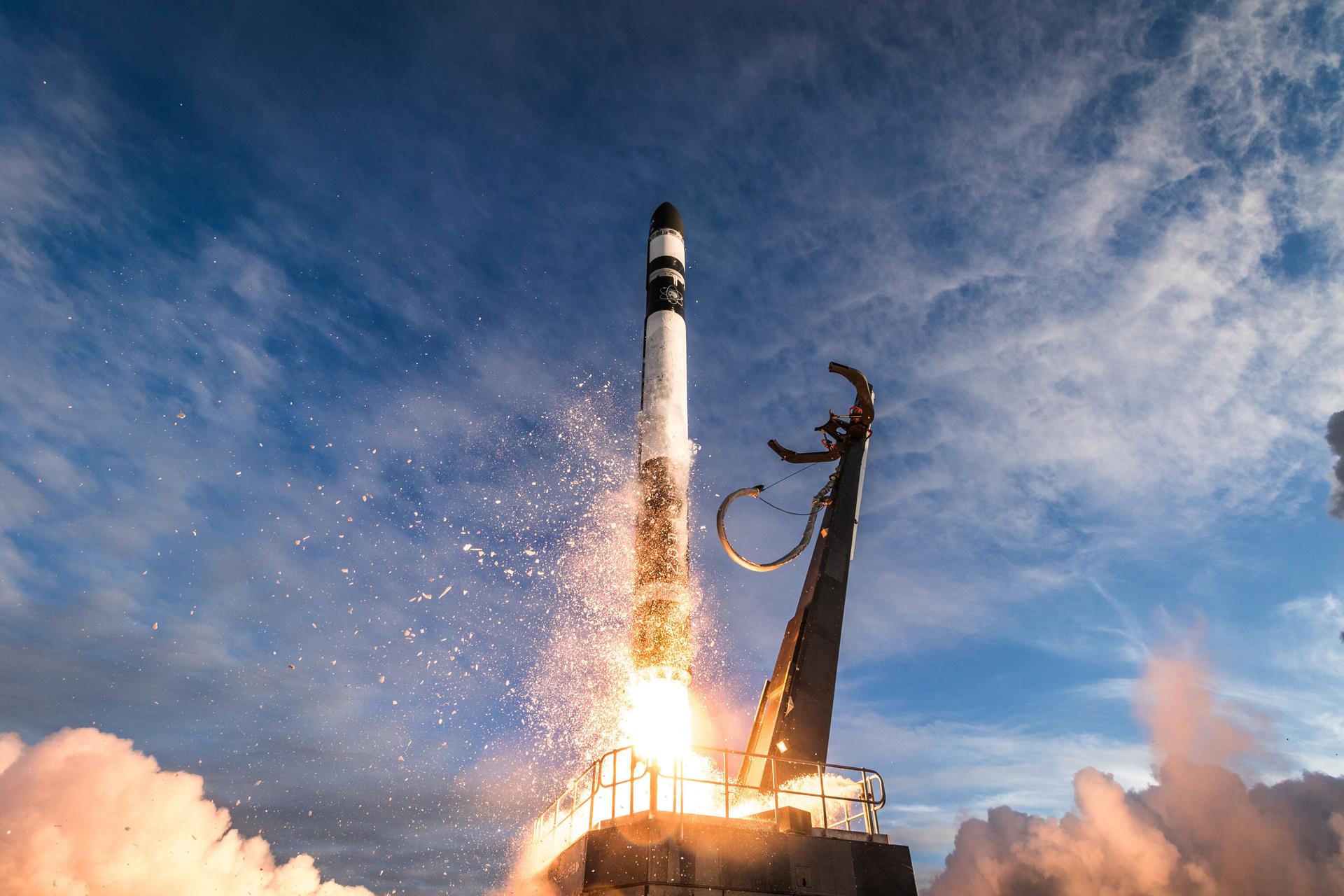
Electron is a two-stage orbital expendable launch vehicle (with an optional third stage) developed by the American aerospace company Rocket Lab. Electron is a small-lift launch vehicle designed to launch small satellites and cubesats to sun-synchronous orbit and low earth orbit. The Electron is the first orbital class rocket to use electric-pump-fed engines, powered by the 9 Rutherford engines on the first stage. It is also used as a suborbital testbed (called HASTE) for hypersonics research.
Successful Launch / Total Launch : 79 / 83
Height: 18.0 m
Diameter: 1.2 m
Liftoff Mass: 13 t
Liftoff Thrust: 162 kN
Cost: 6000000 €
LEO / GTO capacity: 300 kg / - kg
Apogee: - km
1st flight: 2017-05-25
JAXA-manifested rideshare of eight separate spacecraft that includes educational small sats, an ocean monitoring satellite, a demonstration satellite for ultra-small multispectral cameras, and a deployable antenna that can be packed tightly using origami folding techniques and unfurled to 25 times its size. The satellites were originally planned to launch with RAISE-4 on a Japanese Epsilon-S rocket, but the Epsilon-S was heavily delayed due to test firing failures. The 8 satellites are: * MAGNARO-II * KOSEN-2R * WASEDA-SAT-ZERO-II * FSI-SAT2 * OrigamiSat-2 * Mono-Nikko * ARICA-2 * PRELUDE
Type: Technology
Orbit: Sun-Synchronous Orbit (SSO)
Window: 2026-03 NDY
Location: Rocket Lab Launch Complex 1, Mahia Peninsula, New Zealand
Launches from the pad this year / Total launches from the pad: 2 / 0
Total launches from the location: 72
Timezone: Pacific/Auckland